
Blog Topics
Last winter, a massive oak tree in Potomac crashed through a neighbor’s roof during a winter storm. Just weeks earlier, the tree looked perfectly healthy – until hidden decay and heavy ice made it a hazard, resulting in thousands of dollars in emergency removal costs and preventable property damage.
Stories like this aren’t rare in Montgomery County. From Bethesda to Chevy Chase, homeowners with mature trees face similar risks every winter, especially when storms hit suddenly or temperatures swing between freezing rain and snow.
So how do you know when to take action yourself and when it’s time to call a professional? It’s an important decision because choosing the wrong approach can turn a simple maintenance task into a costly emergency.
Key Takeaways
- Professional tree risk assessments by ISA Certified Arborists can potentially prevent storm-related tree failures in Montgomery County’s mature neighborhoods.
- Mature trees over 20 feet tall or within 50 feet of structures require professional evaluation before winter storms.
- DIY winter preparation works for basic maintenance like mulching and minor pruning, but structural issues require expert attention.
- Homeowners can safely perform visual inspections and basic protective measures, but should never attempt major pruning or structural assessments.

Ice accumulation on tree branches creates dangerous conditions that can lead to sudden branch failure, making professional winter preparation essential for Montgomery County homeowners.
Why Winter Puts Montgomery County Trees and Homeowners at Risk
Montgomery County experiences challenging winter weather patterns, especially from nor’easters that can dump heavy snow and ice across the area. Ask anyone who lives here, and they’ll tell you these storms regularly cause power outages and tree failures that damage property.
Many trees in established neighborhoods are now reaching the size and age where they become vulnerable to winter storm damage. These mature specimens provide tremendous value to your property but also pose a significant risk if not properly maintained.
The soil conditions in much of Montgomery County create hidden challenges. Clay-heavy soils and compacted conditions from decades of development can compromise root systems in ways that only become apparent when ice and wind loads test their limits.
” Most of the trees we see fail in winter aren’t sick – they’re stressed. Years of soil compaction, old pruning wounds, or crowded growth can weaken structure without showing obvious signs. An arborist can spot those risks before a storm does. ” – Logan Jones, Owner and ISA Certified Arborist at Riverbend Landscapes & Tree Service
What Winter Tree Preparation Can Homeowners Handle Themselves?
There are several important tasks that Montgomery County homeowners can safely handle, provided they understand the limitations and safety considerations.
Homeowners should start with a thorough visual inspection of your trees. Walk around each mature tree and look for obvious signs of concern, including:
- Dead branches (they’ll lack bark and won’t bend when pushed)
- Cracks in the trunk
- Areas where bark is missing or appears damaged
- Any lean that seems new or has worsened since last year
- Mushrooms or fungi growing on or near the tree
PRO TIP: When performing your visual inspection, use binoculars to examine the upper canopy more closely. Many dangerous structural defects occur in the crown of the tree where they’re difficult to see from ground level, but early detection can prevent catastrophic failure during winter storms.
Simple Winter Tree Care Tasks You Can Do Safely
Once you’ve inspected your trees and confirmed there are no major structural issues, there are a few steps you can safely take to help protect them through winter:
- Apply Organic Mulch: Spread a 2–3-inch layer around the base of your trees, extending out to the drip line but keeping it a few inches away from the trunk. Mulch insulates roots, retains soil moisture, and helps moderate temperature swings.
- Water Before the Ground Freezes: In Northern Virginia’s typically dry late fall and early winter, a deep watering helps trees enter dormancy in good condition and prevents winter dehydration.
- Remove Small Dead or Damaged Branches: Use clean, sharp pruning shears to remove twigs or small branches under 2 inches in diameter. Focus on dead or crossing branches only and avoid attempting larger cuts or anything near power lines.
- Protect Young or Thin-Barked Trees: Wrap the lower trunks of young maples, lindens, or ornamental trees with breathable tree wrap to prevent sunscald and frost cracking. Remove wraps by early spring.
- Rake Up Fallen Leaves and Debris: Clearing the base of your trees prevents moisture buildup and reduces the chance of fungal growth around the root zone during mild, wet winters.
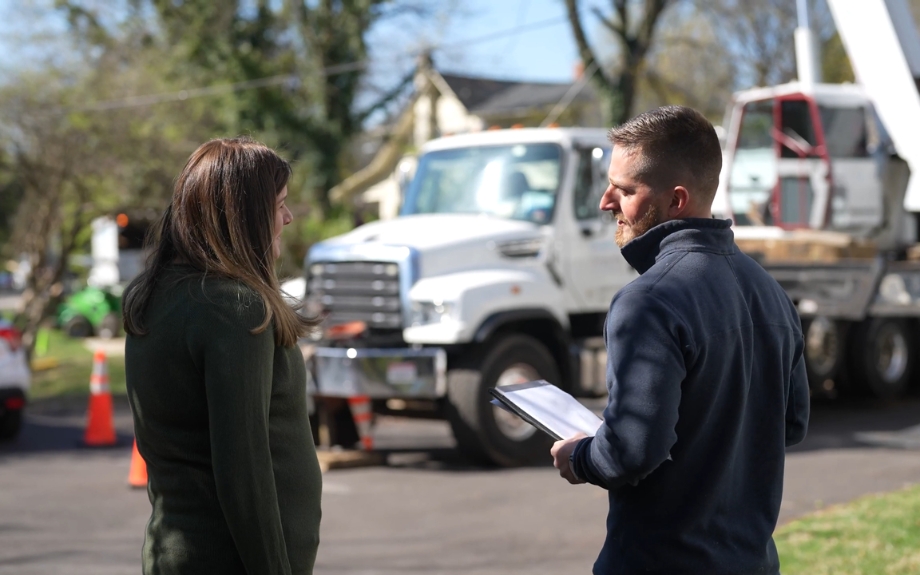
Professional tree risk assessments by ISA Certified Arborists can identify potential hazards before winter storms strike.
When Do You Need Professional Tree Assessment for Winter?
Base your decision to hire professionals on these specific criteria:
- Trees over 20 feet tall
- Trees within 50 feet of your home
- Dead branches over three inches in diameter
- Cracks in major limbs
- Significant lean
- Any trees near utility lines
According to Maryland regulations, work near power lines requires special permits and certified professionals.
What might look like a healthy tree to an untrained eye could have significant internal decay or structural weaknesses that only become apparent under storm stress. Emergency tree removal after storm damage typically costs several times more than preventive care.
Worse yet, the Maryland People’s Law Library notes that homeowners can be held liable for damage caused by trees they knew or should have known were hazardous.
Why Homeowners Should Trust Certified Arborists for Winter Tree Evaluations
ISA Certified Arborists use specialized training and equipment to assess structural integrity, environmental factors, root systems for decay, internal defects in the trunk, and branch structure. They can also provide detailed documentation valuable for insurance purposes, HOA requirements, and property sales.
In cases where trees are deemed too dangerous, winter tree removal may be the safest option.
IMPORTANT: Documentation from professional tree assessments isn’t just valuable for insurance claims. Many Montgomery County homeowners find that having Certified Arborist reports helps with HOA requirements, property sales, and even reduces liability concerns when hosting events on their property.
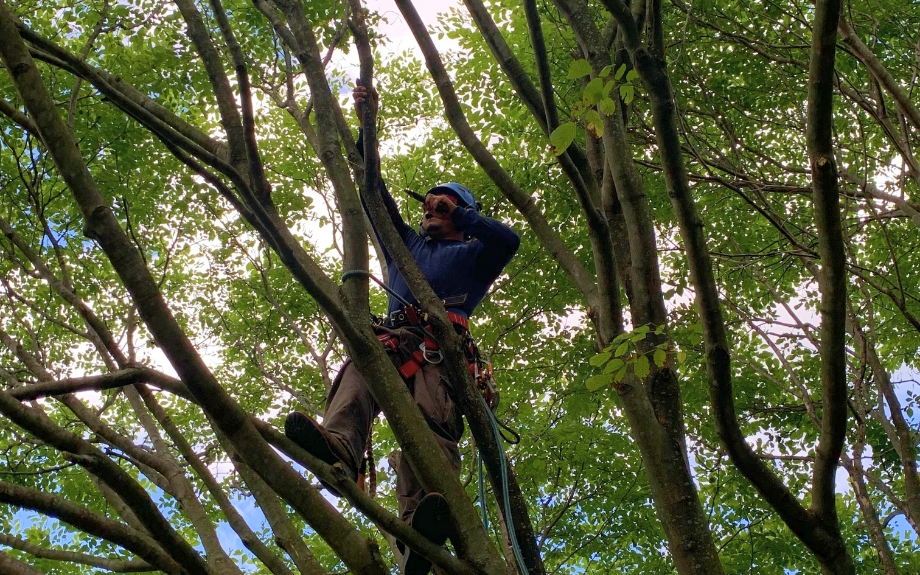
Professional winter pruning can reduce storm damage risk by removing vulnerable branches before severe weather arrives.
Frequently Asked Questions About Winter Tree Prep
Can I trim branches near power lines myself?
Absolutely not. Maryland law requires licensed professionals for any work near utility lines. Even branches that appear safely away from lines can contact them when cut, creating serious safety hazards.
How do I know if my mature oak needs professional attention before winter?
Any oak tree over 20 feet tall should have a professional assessment, especially if it’s within falling distance of structures. Oaks are particularly susceptible to sudden branch failure, and their size makes DIY evaluation inadequate for safety.
When is the best time to schedule winter tree preparation in Montgomery County?
Fall (October-November) is ideal for professional assessment and preparation. This timing allows for the completion of necessary work before winter weather arrives while trees are entering dormancy.
Schedule Your Winter Tree Assessment with Montgomery County’s Experts
Your mature trees are valuable assets that require expert protection during Montgomery County’s challenging winter weather. While basic maintenance can be done yourself, protecting these investments requires ISA Certified Arborists who understand local conditions and risks.
At Riverbend, our local expertise and professional tree service help identify and address potential problems before they become expensive emergencies. Call us today at 703-402-9366 or request an estimate online for your winter tree assessment.

Give Us a Call at 703-402-9366
If you'd like help with your trees or landscape, have any questions, or would like to schedule an appointment with one of our Certified Arborists, please give us a call. We'd love to hear from you!


Other Articles on Our Blog